- Call: 8638235914


Uploaded At: 2023-03-29 23:50:14
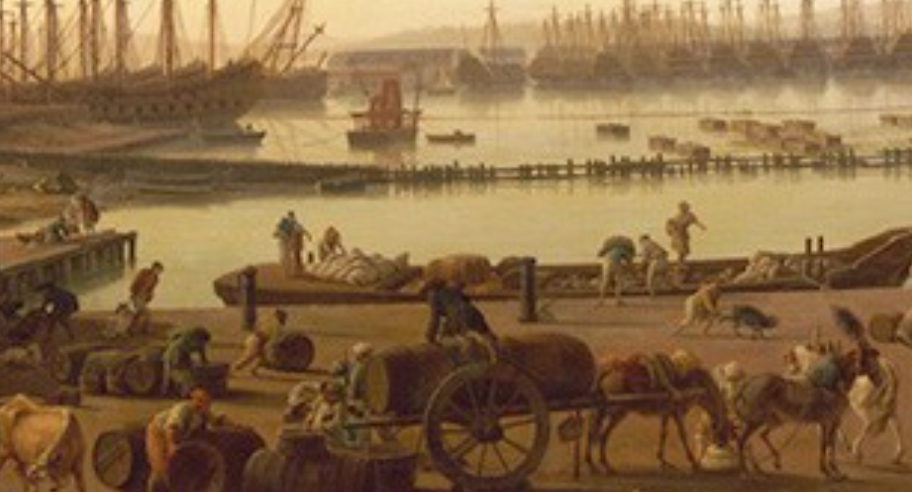
The economic history of India is a complex and diverse one that spans several millennia. India has been an important center of economic activity and trade for centuries, with its rich natural resources and strategic location making it a hub for commerce and cultural exchange. Over time, Indian economic thought has been influenced by various social, political, and cultural factors, leading to the development of unique economic models and practices.
One of the earliest known economic systems in India was based on the concept of dharma, or moral duty, which emphasized the importance of ethical behavior and social responsibility. This concept was later expanded upon in the Arthashastra, a treatise on economics written by Kautilya in the 4th century BCE, which covered topics such as taxation, trade, and governance.
During the medieval period, India saw the emergence of a sophisticated financial system, with the introduction of coins, paper money, and the first formal banking institutions. This period was also marked by the arrival of Islamic and Persian influences, which introduced concepts such as riba (interest) and contributed to the growth of trade and commerce.
The colonial period in India, which lasted from the 17th century to 1947, saw the introduction of modern economic ideas from the West. The British East India Company, which controlled much of India's economy, implemented policies that were largely geared towards their own benefit. This period saw the emergence of Indian economists such as Dadabhai Naoroji, who was one of the first to analyze the economic impact of British colonialism on India.
After India gained independence in 1947, the government implemented policies aimed at industrialization and self-sufficiency. This period saw the emergence of prominent Indian economists such as Amartya Sen, who won the Nobel Prize in Economics in 1998. In the 1990s, India implemented a series of economic reforms that aimed to liberalize the economy and promote free-market principles, leading to significant growth and development in recent decades.
Today, India's economy is one of the fastest-growing in the world, with ongoing debates and discussions around issues such as poverty, inequality, and sustainable development. The country is home to a number of top-notch universities and research institutes that are at the forefront of economic research and policy analysis.
Uploaded At 2023-02-21 00:58:55
Click here to read
Uploaded At 2023-03-10 00:16:04
Click here to read
Uploaded At 2023-03-29 23:47:30
Click here to read
Uploaded At 2022-12-06 20:34:24
Click here to read
Uploaded At 2022-12-12 19:56:21
Click here to read
Uploaded At 2022-12-20 00:41:42
Click here to read
Uploaded At 2022-12-20 21:51:03
Click here to read
Uploaded At 2022-12-26 01:04:28
Click here to read
Uploaded At 2023-01-05 00:04:45
Click here to read
Uploaded At 2023-02-10 18:28:16
Click here to read
Uploaded At 2023-02-20 01:10:37
Click here to read
Uploaded At 2023-02-21 00:58:55
Click here to read
Uploaded At 2023-02-21 01:29:01
Click here to read
Uploaded At 2023-02-21 01:43:11
Click here to read
Uploaded At 2023-02-22 02:41:48
Click here to read
Uploaded At 2023-02-22 02:45:50
Click here to read
Uploaded At 2023-02-24 18:52:21
Click here to read
Uploaded At 2023-03-09 23:01:09
Click here to read
Uploaded At 2023-03-10 00:16:04
Click here to read
Uploaded At 2023-03-18 23:16:53
Click here to read
Uploaded At 2023-03-29 23:47:30
Click here to read
Uploaded At 2023-04-05 00:58:02
Click here to read
Uploaded At 2023-04-28 19:42:33
Click here to read
Parbin
2024-06-06 15:55:31Jithis okstk d7638